








Are you experiencing joint pains that make it tough to work out without losing muscle mass? We have a solution for you.
Whether it’s stiff knees, sore shoulders, or nagging elbows, joint pain can throw off your entire training rhythm. What used to be your go-to lifts, bench press, squats, pull-ups, might now feel like ticking time bombs, threatening to flare up or sideline you altogether.
This pain usually stems from years of wear and tear, previous injuries, poor movement patterns, or even training too hard for too long without proper recovery. Aging doesn’t help either. Cartilage thins, connective tissue weakens, and inflammation lingers longer.
But here’s the good news: You can still train effectively and maintain muscle even with joint issues. With the proper adjustments in your workout routine, combined with targeted exercises and recovery techniques, you stay strong and keep pain at bay.
In this article, you’ll learn how to train around joint pain without losing muscle. But before that, let’s break down the most common joint issues.
The Most Common Joint Trouble Spots
As you age, you are likely to lose muscle mass, which makes the body’s joints take up more responsibility when weightlifting or loading. The more these joints, especially the shoulder, knee, and elbow, are heavily involved in everyday movement and training, the more they become vulnerable to wear and tear, leading to joint pain.
In addition to muscle loss and conditions like lupus and osteoarthritis, joint pain can occur due to repetitive stress caused by improper exercises. For instance, squatting or jumping incorrectly can cause pain in the knee joint. Weak hip muscles or limited ankle mobility are also common culprits of knee joint pain.
Shoulder pain may occur due to overhead lifting, pressing, or pulling motions that strain the rotator cuff or impinge on tendons. Tight chest muscles and poor posture can worsen the issue, leading to chronic discomfort or frozen shoulder.
Elbow pain, such as tendinitis, often stems from overuse, particularly during exercises that involve pulling, pushing, or gripping. Repeated strain on the tendons without proper recovery leads to inflammation and stiffness.
How to Train Joint Pain Without Losing Muscles
When training with joint pain, your approach needs to change. You can’t train like someone without pain, and that’s okay.
First, choose joint-friendly exercises that are simple to perform. This could include aerobic strengthening and a full range of motion exercises.
Full range of motion exercises reduce joint stiffness and increase joint range of motion, which improves flexibility. On the other hand, strengthening exercises such as weight training build stronger muscles that support and protect the joints.
Aerobic exercises like walking and swimming increase your heart rate, which enhances blood flow. This aids in reducing inflammation in the joint and improves general circulation, which can relieve pain.
If you are experiencing intense joint pain or recovering from an injury, start with a short session and avoid maximal loads. It is recommended that you use weights around 60–75% of your one-rep max. This keeps stress off your joints while still stimulating your muscle growth.
Also, remember to cut your total sets per muscle group. Aim for 10–15 quality sets per week instead of 20+. Fewer sets means less inflammation, faster recovery, and hypertrophy.
Additionally, manipulate your tempo. Slow down each rep. Try 3 seconds down, a pause, then a steady lift. This builds muscle without heavy weights.

Image of displeased young sportsman standing isolated over grey background. Looking aside have painful feelings in leg.
7 Friendly Exercises for Joint Pains and Muscle Growth
When it comes to painful joints, not all exercises are created equal. Here are seven moves that help you alleviate joint pains while maintaining muscle mass.
1. Swimming
Swimming is a full-body, low-impact cardio exercise that works on multiple muscles. When swimming, water supports your body weight, reducing stress on your painful joints while allowing full movement. This makes it ideal for sore knees, hips, or shoulders.
Swimming also provides resistance without impact, which helps maintain muscle strength and tone without the pounding of weight-bearing exercises like running or jumping.
It further offers a full range of motion that improves flexibility and increases blood flow to stiff areas, reducing inflammation. It keeps your joints moving in a safe, controlled environment. For best results, swim for 20–30 minutes, three times a week.
2. Walking
Walking is one of the simplest and most effective ways to manage joint pain while preserving muscle. It is a low-impact aerobic exercise that doesn’t place excessive stress on your joints like running or jumping might. Instead, walking supports gentle movement that keeps your joints mobile and reduces stiffness, especially in the knees, hips, and ankles.
Regular walking also improves blood circulation, which delivers oxygen and nutrients to your muscles and joints for better recovery and function. It also engages major muscle groups in your legs, including the quads, hamstrings, calves, and glutes, maintaining strength without overloading the joints.
To get the full benefit, aim to walk for 20–30 minutes per day, at a pace that feels comfortable but slightly brisk.
3. Cycling
Cycling is an excellent joint-friendly cardio workout that helps relieve joint pain while building muscle, especially in the lower body. It works the quadriceps, hamstrings, glutes, and calves without placing heavy stress on the knees, hips, or ankles.
The circular motion of pedaling keeps the joints moving smoothly and helps improve flexibility, blood flow, and joint lubrication. With this movement, along with smooth nutrient and oxygen flow, you can reduce stiffness and inflammation in the joints and strengthen the muscles that support your joints.
Aim for 30 minutes of moderate cycling, three to five times a week for best results.
4. Seated Knee Extension
Seated knee extensions are an isolated strength exercise that targets the quadriceps, the large muscles at the front of your thighs. These muscles support the knee joint, so keeping them strong can help reduce knee pain, improve joint stability, and prevent further injury.
Unlike squats or lunges, seated knee extensions place minimal pressure on the knee joint, making them ideal if you’re dealing with joint pain or recovering from injury.
Strengthening the quads also improves your ability to walk, climb stairs, and balance, especially if joint pain limits your activity.
How to do Seated Knee Extensions
- Sit upright in a chair with your back straight and feet flat on the floor.
- Keep your thighs parallel and knees bent at 90 degrees.
- Slowly extend one leg forward until it’s straight or as far as you can go comfortably.
- Hold the position for 2–3 seconds at the top.
- Return your leg to its starting position.
- Repeat for 10–12 reps, then switch legs.
- Complete 2–3 sets per leg, 2–3 times per week.
You can add light ankle weights or resistance bands over time to make the movement more challenging as your joints allow.

5. Stretches
Stretches are active recovery exercises that can help manage joint pain in areas like the knees, elbows, and shoulders without causing muscle loss.
When performed correctly, stretches improve flexibility, reduce stiffness, and increase blood flow to the muscles and joints, which reduces inflammation.
Keeping your muscles flexible around painful joints not only prevents further strain and injury but also improves circulation of oxygen and nutrients, aiding in healing and reducing muscle soreness.
Various stretches can help alleviate joint pain in your knees, elbows, and shoulders. Some of them include:
- Hamstring stretch
- Quadriceps stretch
- Calf stretch
- Flexor stretch
- Wrist extensor stretch
- Cross-Body shoulder stretch
- Doorway chest stretch
6. Half Squat
Half squat is a classic modified squat that targets the hamstrings, quadriceps, and glutes, with less knee strain. It improves lower-body strength and joint function. Maintain shallow knee flexion when squatting. Do 2–3 sets of 8–10 reps, twice weekly.
7. Lying Knee Bend
This mobility exercise targets the knees and hips by gently bending the leg toward the chest. It relieves stiffness and improves range of motion. It’s beneficial for post-injury recovery. Perform 10 reps per leg, holding for 5 seconds each, daily.
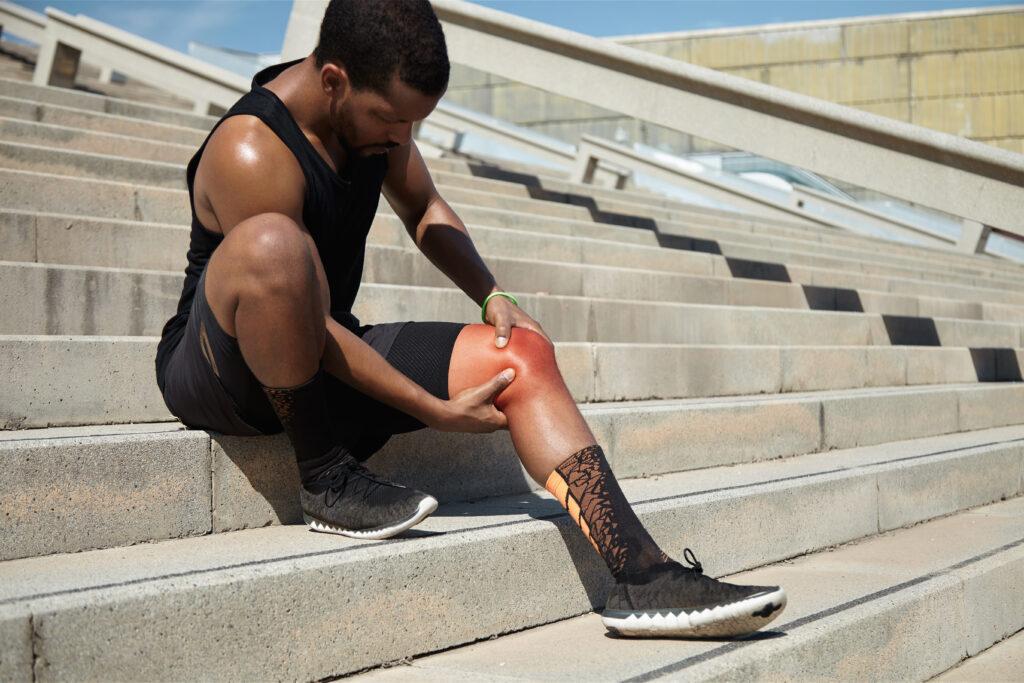
Physical injury concept. Attractive African runner with athletic body wearing black running shoes, sitting on steps on concrete stair, clutching injured knee in excruciating pain depicted in red color
Tips to Consider When Training with Joint Pain
Before jumping into any workout, approach training with a recovery-first mindset. Joint pain doesn’t just respond to the right exercises. It also requires thoughtful preparation, careful execution, and consistent recovery habits. Here are key tips to keep in mind before, during, and after each workout:
1. Warm-Up Properly
Always start with 5–10 minutes of light cardio, followed by dynamic movements that increase blood flow, loosen stiff joints, and activate key muscles.
2. Train Within Your Pain-Free Range
Never force your joints through painful movements. If something hurts, stop or modify.
3. Prioritize Low-Impact Movements
Swimming, walking, cycling, and water aerobics are great for conditioning without putting stress on your knees, elbows, or shoulders.
4. Use Light Resistance and Controlled Tempo
Keep weights light or bodyweight-only. Slow down each movement to build muscle tension without joint compression.
5. Focus on Nutrition
A balanced diet rich in lean protein, healthy fats, and antioxidants helps reduce inflammation, supports recovery, and builds and preserves muscles. Add foods like fatty fish, leafy greens, lean meat, and fruits.
6. Consider Recovery Supplements
For quick recovery and increased muscle growth, consider using supplements such as Collagen, Omega-3 fatty acids, BCAAs, Magnesium & electrolytes.
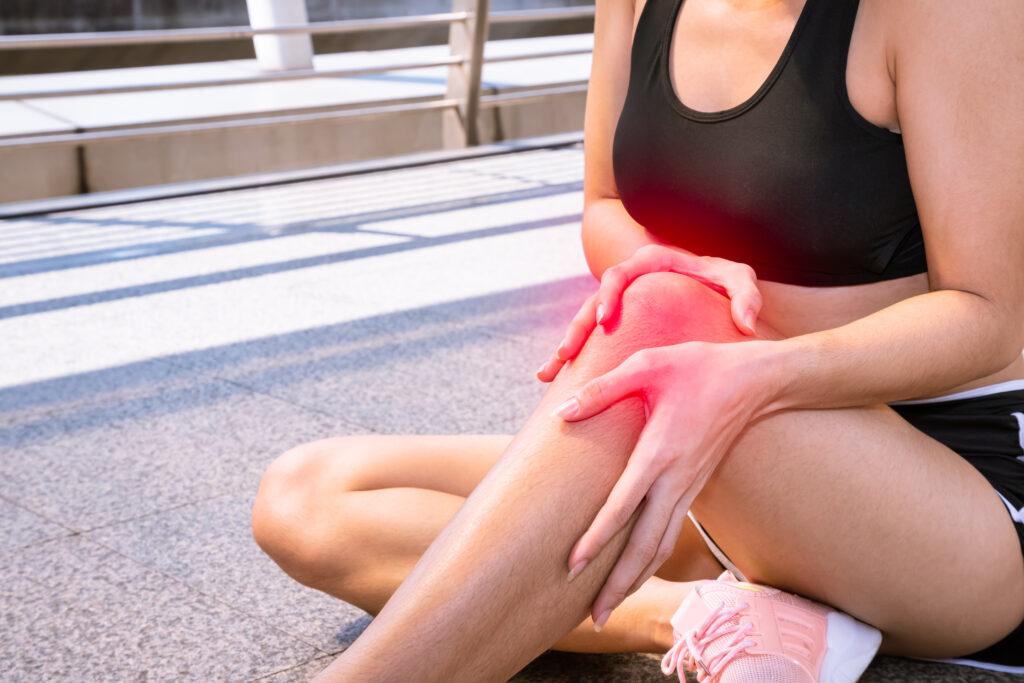
Young sport woman suffered from knee pain injury while running in city
Conclusion
Joint pain doesn’t mean your fitness journey is over. It simply means being more intentional with your training.
With smart modifications, joint-friendly exercises, and supportive recovery nutrition, you can stay strong without aggravating old injuries.
It’s not about pushing through pain. It’s about working around it with wisdom, patience, and persistence.









You must be logged in to post a comment Login